
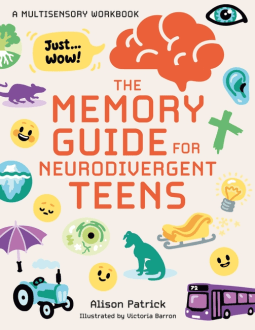
“The Memory and Processing Guide to Neurodiverse Learners: Strategies to Success” by Alison Patrick is an introductory guide to help neurodivers learners build daily or memory habits to a more successful life. And does it deliver? Sort of.
While the book means to focus on introducing memory techniques and explaining neurodiversity, it seems to only have basic facts down. The memory techniques mentioned are mostly standard (Memory Castle, Using color rulers and going to accessible Webpages with Dyslexic Friendly Fonts, etc.). And only very rudimentary explanations are given for how some neurodiverse conditions work (I believe fleshing out more of an explanation would be key for readers to adopt the new knowledge as necessary). Although to be fair, I thought it would be a full blown science book before clicking into it, so when I finished, I was left undoubtedly wanting more: I wanted to learn a diverse set of memory techniques (or just see more in the book), read about personal anecdotes, or be given more in-depth explanations.
Instead, the book’s attractive point seems to be the fact that it would probably be a comforting read for one who is in the neurodiverse community. For one, the authors try to be relatable yet inspirational (in a way that tries to convince readers their differences are superpowers — to which, they have been pretty convincing).
The explanations are amazingly simplified. Graphics and chapters are color coded, the book is never too cluttered in any given area, explanations are full of clear analogies, and there are chapter summaries! You can tell there was an intent on making this book digestible. And the author and illustrated nailed it.
I also like the fact that the author tries to make the book fun (which… the author could have executed better, but nevertheless I’ll give bonus points for an attempt). The writing is sprinkled with cute emojis, but then every now and then, you’ll be hit with… “Remember, it’s fine to be a GRASSHOPPER and dip in and out of this book to find bits you want to read” — message is fine, but I would replace “GRASSHOPPER” with a less jarring and more warming organism. Maybe rabbits?
Bottom line: recommend for neurodiverse teenagers (of all ages) and for parents (who have neurodiverse kids) who want to learn more about neurodiversity and memory strategies, but don’t know where to start. Simple, fun, and a comforting read.
Rating: 4 out of 5 stars.


 Teens of Bay Area
Leave a comment